• Home
  • About Us
  • Donate
  • The Portal
  • Shop
  • Contact Us
    • Essential Contacts
The Grey Fox PortalThe Grey Fox Portal
The Grey Fox Portal
  • Home
  • About Us
  • Donate
  • The Portal
  • Shop
  • Contact Us
    • Essential Contacts

About admin

This author hasn't written their bio yet.
admin has contributed 16 entries to our website, so far.

Understanding Half-Staff Honors: Who Decides and Why? Rev. Jessie Jackson?

February 23, 2026

Understanding the Rules and Qualifications for Flying the American Flag at Half‑Staff — and the Most Controversial Decisions

Flying the American flag at half‑staff is a powerful national symbol of mourning, respect, and collective reflection. Although the practice feels steeped in tradition, the rules governing when and why the flag can be lowered are rooted in a combination of federal law, presidential discretion, and historical precedent. This article breaks down the official qualifications, the legal framework behind half‑staff observances, and several major—and sometimes controversial—instances in recent history.


1. The Official Rules for Flying the U.S. Flag at Half‑Staff

Proclamation 3044 (1954): The Foundational Guidelines

The modern federal rules for half‑staff display were established by President Dwight D. Eisenhower in Proclamation 3044, issued March 1, 1954. It remains the core authority. [halfstaffalert.org]

Under this proclamation:

• President or former President: 30 days
• Vice President, Chief Justice (or retired), Speaker of the House: 10 days
• Cabinet members, former VP, Secretaries of the Army/Navy/Air Force: From day of death until interment
• Members of Congress: Half‑staff in D.C. for day of death and following day; in their home state/district from death until interment
• Governors: Half‑staff within their state/territory until interment

These rules apply to all federal buildings, naval vessels, and military posts.


Flag Code Guidelines

The U.S. Flag Code supplements Proclamation 3044 with broader etiquette, including:

• The flag should be raised to the peak before being lowered
• The President or a state governor may issue half‑staff orders
• Memorial Day is a special case: half‑staff only until noon [flagpatriots.com]


Who Can Order Half‑Staff?

According to the Department of Veterans Affairs:

• President – for national mourning
• State governors – for state‑level losses
• Heads of federal agencies – for facilities under their jurisdiction [va.gov]


2. How Presidential Discretion Shapes Practice

Although the rules provide structure, presidential discretion significantly influences who receives the honor. Half‑staff orders have extended beyond government officials to include cultural figures, astronauts, religious leaders, and victims of national tragedy.

Examples of discretionary expansions include:

  • Martin Luther King Jr. in 1968 (civil rights leader and minister)
  • John Glenn in 2016 (astronaut and senator)
  • Pope John Paul II in 2005
  • Reverend Billy Graham in 2018 [sundial.csun.edu]

These demonstrate that the honor extends to individuals of substantial national significance, even outside government roles.


3. Controversial Half‑Staff Decisions

The lowering of the flag often sparks public debate—especially when political or ideological tensions run high. Based on your request, here are some major controversial cases of inclusion and exclusion drawn from the search results.


Case 1: Charlie Kirk (2025) — Highly Controversial Inclusion

President Trump ordered flags flown at half‑staff nationwide after the assassination of political activist Charlie Kirk. [sundial.csun.edu], [yahoo.com]

Why it was controversial:

• Kirk was a polarizing political figure
• The decision broke from traditional norms, as activists rarely receive national half‑staff honors
• It followed earlier accusations of selective application—for example, another official’s death did not receive a similar order (Rep. Melissa Hortman) [sundial.csun.edu]


Case 2: Dick Cheney (2025) — Campus‑Level Controversy

Upon former Vice President Dick Cheney’s death, institutions such as Wesleyan University followed federal practice and lowered their flags—despite student opposition. [wesleyanargus.com]

Why it caused debate:

• Many students viewed Cheney as a controversial figure due to the Iraq War
• They felt lowering the flag conflicted with university values
• It highlighted tensions between federal norms and institutional autonomy


Case 3: Missed Half‑Staff Orders (Selective Omissions)

President Trump’s failure to order flags lowered following the assassination of Minnesota State Representative Melissa Hortman fueled discussion about inconsistency. [sundial.csun.edu]

Why it was controversial:

• Precedent typically supports honoring slain elected officials
• The omission raised concerns about political favoritism


Case 4: Public Reaction to Local Tragedies

Half‑staff orders often vary by state, and residents sometimes question why certain tragedies lead to state‑level honors while others don’t. For example, multiple states have lowered flags for:

• Mass shootings
• Local civil rights leaders
• Fallen first responders [newsweek.com]

These decisions can be politically and emotionally charged.


4. Why Controversies Happen

Half‑staff observances touch on deeply personal and political beliefs about:

• Who deserves national honor
• Whether the flag should remain an apolitical symbol
• Consistency between administrations
• The line between public mourning and political signaling

Because the President holds broad discretion, decisions inevitably reflect differing interpretations of national significance.


5. Conclusion

Flying the American flag at half‑staff is meant to signal unity, grief, and national remembrance. Yet as the historical record shows, decisions about who qualifies can be both consistent with longstanding guidelines and shaped by modern political realities. The resulting tension between tradition, discretion, and public sentiment ensures that half‑staff declarations will remain a subject of national conversation.

Read More
0
0
Thank you, Jessie Jackson.

Thank you, Jessie Jackson.

February 17, 2026

Rev. Jesse Jackson: A Legacy of Civil Rights, Political Ambition, and Legal Impact

The Rev. Jesse Louis Jackson, one of the most influential civil rights leaders of the late 20th and early 21st centuries, died on February 17, 2026, at the age of 84. His family announced that he passed peacefully, surrounded by loved ones, after years of declining health linked to progressive supranuclear palsy and Parkinson’s disease. CBS News

Born Jesse Louis Burns on October 8, 1941, in Greenville, South Carolina, Jackson’s early life reflected the racial and social inequities that would later define his activism. Raised by his mother, Helen Burns, and later adopted by his stepfather, Charles Henry Jackson, he grew up in a segregated South that shaped his worldview and commitment to justice. Wikipedia


Civil Rights Roots and Legal Significance

Jackson emerged as a protégé of Dr. Martin Luther King Jr., joining the civil rights movement in the 1960s and participating in pivotal events such as the Selma marches. He was present in Memphis when Dr. King was assassinated in 1968, a moment that propelled him into national leadership. CBS News

For law students, Jackson’s activism offers a case study in how social movements influence legal change. His work with the Southern Christian Leadership Conference (SCLC) and later the founding of Operation PUSH and the Rainbow Coalition helped shape national conversations around voting rights, economic justice, and equal protection—issues that continue to animate constitutional litigation today. WYFF News 4


Family Life and Public Scrutiny

In 1962, Jackson married Jacqueline Brown. Together they raised five children, and Jackson fathered a sixth child outside the marriage—an event that drew public scrutiny but did not diminish his influence within civil rights circles. Several of his children, including Jesse Jackson Jr. and Jonathan Jackson, went on to hold public office, extending the family’s political legacy. WYFF News 4


Presidential Campaigns: Expanding the Political Landscape

Jackson’s presidential runs in 1984 and 1988 marked watershed moments in American political history. Though he did not win the Democratic nomination, he broke barriers as the first African American candidate with a viable national campaign infrastructure and a broad multiracial base.

  • 1984 Campaign: Jackson earned 3.3 million votes, finishing behind Walter Mondale and Gary Hart. POLITICO
  • 1988 Campaign: He expanded his support to 6.9 million votes, finishing second to Michael Dukakis and demonstrating the electoral power of minority and working‑class voters. POLITICO

His “Rainbow Coalition” became a model for inclusive political mobilization, influencing later candidates and reshaping Democratic Party strategy. For law students, these campaigns highlight the intersection of electoral law, civil rights, and political representation—particularly in the context of voting access, delegate allocation, and campaign finance.


A Legacy for Future Legal Advocates

Jackson’s life underscores the enduring relationship between grassroots activism and legal reform. His advocacy helped push issues such as racial discrimination, economic inequality, and police accountability into the national legal agenda. His speeches—often invoking constitutional principles of equality and justice—continue to resonate in contemporary debates over civil rights litigation and legislative reform.

As his family stated, Jackson was “a servant leader… to the oppressed, the voiceless, and the overlooked around the world.” CBS News

For law students, his legacy serves as both a historical foundation and a call to action: the law does not evolve in isolation but in response to the moral demands of those willing to challenge injustice.


Read More
0
0

Estate Planning Essentials

January 23, 2026

Avoid Probate Court & Protect Your Legacy

This edition includes: A user-friendly checklist designed to guide you and your family away from the probate process—saving time, money, and unnecessary stress.

A must-read for families planning ahead.


Why Families Should Avoid Probate Court

Probate is the legal process used to settle an estate after death. While common, it is often slow, costly, and emotionally draining.

  • Time Delays: 6–18 months or longer
  • High Expenses: Court fees, attorney fees, executor costs (5–10% of estate)
  • Public Records: Assets and beneficiaries become public information
  • Family Stress: Disputes, confusion, and strained relationships

Vanished or Locked Wealth Within Probate Courts

The Vanishing Inheritance

When Margaret passed away, her three children believed the family home would pass to them—just as she had promised. Unfortunately, Margaret never created a will.

What happened next:

  • Probate court took control
  • Months of legal battles followed
  • Thousands were spent on attorney fees
  • A distant relative surfaced and claimed a share
  • The home was sold to cover court costs

Outcome: The siblings were left with nothing but regret and fractured relationships.

How this could’ve been avoided: A living trust or a properly executed will would have honored Margaret’s wishes and kept her estate out of probate.


The Locked Bank Account

After James died unexpectedly, his wife Linda discovered she couldn’t access their savings. Although they shared everything, the accounts were solely in his name.

The consequences:

  • Bank accounts were frozen
  • Probate court intervened
  • Nine months passed before access was granted
  • Linda borrowed money to cover expenses
  • She nearly lost her home

How this could’ve been avoided: Joint ownership, named beneficiaries, or a Transfer-on-Death (TOD) designation would have allowed immediate access.


How to Avoid Probate Court

  • Create a Living Trust: Transfers assets directly to beneficiaries without court involvement.
  • Use Beneficiary Designations: Applies to retirement accounts, insurance, and bank accounts.
  • Joint Ownership with Right of Survivorship: Assets pass automatically to the surviving owner.
  • TOD & POD Accounts: Simple designations that bypass probate.

Affordable, Reliable Estate Planning Help

LegalZoom

  • Step-by-step document creation
  • Access to licensed attorneys
  • Secure document storage and updates
  • Ideal for guided professional support

LawDepot

  • Customizable legal templates
  • One-time or subscription pricing
  • Instant downloads
  • Full DIY flexibility

Probate Prevention Checklist

TaskCompleted
Create or update your will☐
Set up a living trust☐
Name beneficiaries on accounts☐
Add TOD/POD designations☐
Review joint property ownership☐
Organize estate documents securely☐
Use LegalZoom or LawDepot☐
Communicate wishes with family☐

Final Thoughts

You’ve spent a lifetime building your legacy—don’t let probate court unravel it. With smart planning and trusted tools, your wishes can be honored and your loved ones protected.

Your legacy should be a gift—not a burden.

Simplifying Your Legal Needs

Trusted by Thousands of Clients

LegalZoom and LawDepot make estate planning accessible, affordable, and stress-free—so you can focus on what matters most.

Read More
0
0
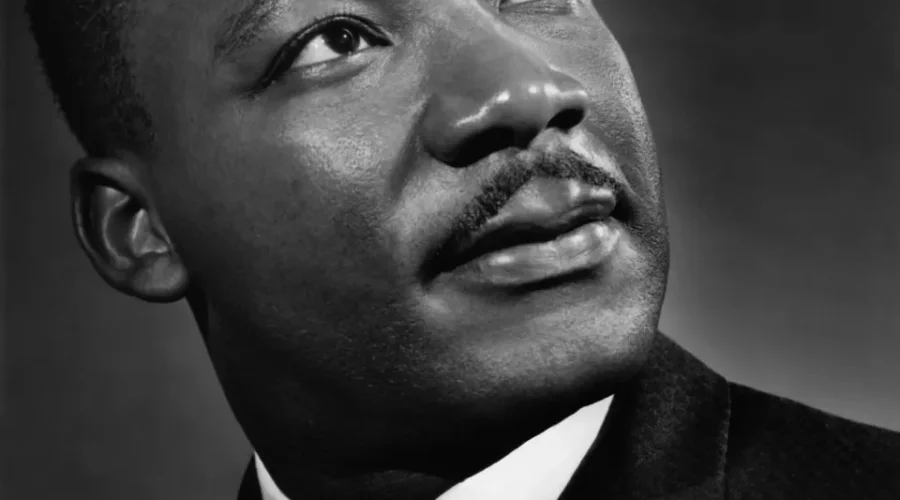
Honoring Martin Luther King Jr. and the Legacy of Civil Rights Month

Honoring Martin Luther King Jr. and the Legacy of Civil Rights Month

January 22, 2026

Each year, Civil Rights Month offers an opportunity to reflect on the ongoing struggle for equality, justice, and human dignity in the United States. At the heart of this reflection is the legacy of Dr. Martin Luther King Jr., a leader whose courage, vision, and commitment to nonviolence helped transform the nation.

The Life and Leadership of Dr. Martin Luther King Jr.

Dr. Martin Luther King Jr. was born on January 15, 1929, in Atlanta, Georgia. As a Baptist minister and civil rights leader, he became one of the most influential figures in American history. Dr. King believed deeply in the power of peaceful protest and moral persuasion, drawing inspiration from his faith and the teachings of Mahatma Gandhi.

He rose to national prominence during the Montgomery Bus Boycott in 1955, a protest sparked by Rosa Parks’ refusal to give up her seat on a segregated bus. This movement marked the beginning of a broader push to dismantle segregation and discriminatory laws across the country.

The Civil Rights Movement

The Civil Rights Movement of the 1950s and 1960s sought to end racial discrimination and secure equal rights for African Americans. Through marches, boycotts, sit-ins, and speeches, activists challenged unjust systems and demanded change.

One of Dr. King’s most powerful moments came in 1963 during the March on Washington, where he delivered his historic “I Have a Dream” speech. In it, he called for a nation where people would be judged not by the color of their skin, but by the content of their character. This speech remains a defining message of hope, unity, and justice.

The movement helped lead to major legislative victories, including the Civil Rights Act of 1964 and the Voting Rights Act of 1965, which outlawed segregation and protected voting rights.

Why Civil Rights Month Matters Today

Civil Rights Month is not only about remembering the past—it is about recognizing that the work of justice and equality continues. While significant progress has been made, issues such as racial inequality, social injustice, and unequal access to opportunity still exist.

Honoring Dr. King’s legacy means committing to fairness, respect, and compassion in our everyday lives. It means standing up against injustice, listening to diverse voices, and working toward stronger, more inclusive communities.

Carrying the Legacy Forward

Dr. Martin Luther King Jr. once said, “The time is always right to do what is right.” Civil Rights Month reminds us that positive change begins with individual actions—whether through education, service, advocacy, or simple acts of kindness.

By reflecting on the lessons of the Civil Rights Movement and the life of Dr. King, we honor those who fought for equality and renew our responsibility to build a future rooted in justice, unity, and hope for all.

Read More
0
0
Smart Tech for Seniors: AI and Bionics Lead the Way in Safer, Easier Living

Smart Tech for Seniors: AI and Bionics Lead the Way in Safer, Easier Living

October 4, 2025

As the global population ages, technology companies are racing to meet the needs of older adults with innovations that blend artificial intelligence, robotics, and bionics. From fall detection systems to voice-activated assistants, the latest tech offers seniors new ways to live independently, stay connected, and manage health with ease.

At this year’s Consumer Electronics Show and across major retail platforms, several standout products have emerged as game-changers for aging in place. These devices are not only available for purchase but are designed with accessibility, safety, and simplicity in mind.

One of the most popular devices is the GrandPad, a tablet built specifically for seniors aged 75 and older. With large icons, simplified navigation, and 24/7 customer support, GrandPad helps users stay in touch with family and caregivers. Its new feature, Grandie Chat, uses AI to engage users in voice-first conversations about hobbies, news, and wellness. The device retails for approximately 450 dollars and is available on Amazon and other major platforms.

For fall detection, the Kami Fall Detect Camera uses millimeter-wave radar to monitor movement in rooms like bathrooms and bedrooms. Unlike wearable devices, Kami does not require charging or remembering to wear it. It can alert caregivers or emergency services instantly when a fall is detected, offering peace of mind for seniors living alone.

Smartwatches such as the Apple Watch Series 9 and Fitbit Sense continue to be top choices for health monitoring. These wearables track heart rate, detect falls, and send emergency alerts. Some models include ECG monitoring and medication reminders, making them essential tools for chronic condition management.

Voice-activated smart speakers like Amazon Echo and Google Nest allow seniors to control lights, thermostats, and locks with simple voice commands. These devices also support medication reminders, music playback, and hands-free calling, reducing reliance on touchscreens and improving accessibility for users with limited mobility or vision.

Bionic innovations are also making strides. Robotic companions with AI-powered support are being developed to assist with daily tasks, provide social interaction, and monitor health. While many are still in prototype stages, companies like InnoGI Technologies are exploring commercial models that could soon be available to consumers.

Other notable products include adjustable e-readers like Kindle Paperwhite for vision-impaired users, smart pill dispensers that track medication schedules, and wearable hearing aids with AI-driven sound filtering.

Experts say the key to successful tech adoption among seniors is simplicity, reliability, and relevance. Devices that reduce friction, offer real-time support, and integrate seamlessly into daily routines are more likely to be embraced.

As innovation continues, the market for senior-friendly technology is expected to grow rapidly. With AI and bionics leading the charge, older adults now have more tools than ever to live smarter, safer, and with greater ease.

Read More
0
0
How Data Analytics in Healthcare is Revolutionizing Patient Care

How Data Analytics in Healthcare is Revolutionizing Patient Care

October 4, 2025

Lorem Ipsum is simply dummy text of the printing and typesetting industry. Lorem Ipsum has been the industry’s standard dummy text ever since the 1500s, when an unknown printer took a galley of type and scrambled it to make a type specimen book. It has survived not only five centuries, but also the leap into electronic typesetting, remaining essentially unchanged. It was popularised in the 1960s with the release of Letraset

Read More
0
0
  • 1
  • 2

Contact Us

We're currently offline. Send us an email and we'll get back to you, asap.

Send Message

Location

6050 Peachtree Pkwy STE 240–403
Norcross, GA 30092

+1 (844) 473-9399

editors@thegreyfoxportal.org

  • Home
  • About Us
  • Donate
  • Shop
  • The Portal
  • Contact Us

© The Grey Fox Portal. Built by DS Design Concepts.